


Julian Oliver, Critical Engineer und Künstler, stellt in seinem Vortrag
Projekte vor, die die techno-politischen Inteulian Oliver is a New Zealander, Critical Engineer and artist based in
Berlin.
Links und Downloads
Julian oliver
Themes
Themen
- Exhibition
- Awards
- Library
- Speech
- edition KHM
- Festival / Award ceremony
- FG exMedia
- FG Film und TV
- FG Kunst
- FG Kunst- und Medienwissenschaften
- Movie screening
- Glasmoog Books
- Glasmoog - Raum für Kunst und Diskurs
- KHM Journal
- Concert
- Cooperation
- LAB Jahrbuch
- LECTURE Reihe
- Teachers elsewhere
- literature
- off topic
- News articles
- Publications
- Job offers
- Study
- TV broadcast
- Event
- all
Medienkatastrophe (2): Julian Oliver – TCP FYI ARP WTF SSL IDK NVM
KHM

No Network – Mobile network jammer. Julian Oliver, 2013
Lecture in English
Mittwoch, 22. Juni 2016
19 Uhr
Aula, Filzengraben 2
50676 Köln
Intro: Jonas Hansen
19 Uhr
Aula, Filzengraben 2
50676 Köln
Intro: Jonas Hansen
In his talk Julian Oliver will introduce projects that expose and exploit the hidden techno-political world behind the devices and networks we use, showing how our increasingly engineered world engineers us. In doing so, he will assert that technically-experimental artistic practices play an increasingly important role in understanding and interrogating the 'black boxes' of our time – whether surveillance-drones, social networks, smartphones or Internet of Things. Finally, Julian will show that curiosity, imagination and persistence – not an engineering degree – are what's needed to employ tools, ideas and techniques from domains such as network hacking, reverse engineering or data forensics into an existing art practice.
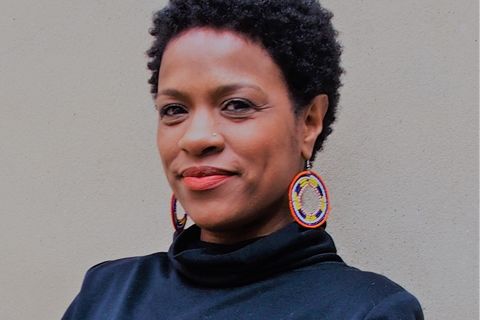
Julian Oliver is a New Zealander, Critical Engineer and artist based in Berlin. His work and lectures have been presented at many museums, galleries, international electronic-art events and conferences, including the Tate Modern, Transmediale, the Chaos Computer Congress, Ars Electronica, FILE and the Japan Media Arts Festival. Julian has received several awards, most notably the distinguished Golden Nica at Prix Ars Electronica 2011 for the project ‘Newstweek’ (with Daniil Vasiliev).
Julian has also given numerous workshops and master classes in software art, data forensics, creative hacking, computer networking, counter-surveillance, object-oriented programming for artists, augmented reality, virtual architecture, video-game development, information visualisation and UNIX/Linux worldwide. He is an advocate of Free and Open Source Software and is a supporter of, and contributor to, initiatives that promote and reinforce rights in the networked domain.
Articles about Julian’s work, or work he’s made with others, have
appeared in many news channels. Among them are The BBC (UK), The Age
(AU), Der Spiegel (DE), El País (ES), Libération (FR), The New York
Times (US), La Vanguardia (ES), The Guardian Online (UK), Cosmopolitan
(US), Wired (DE, US, UK), Slashdot (US), Boing Boing (US), Computer
World (World), and several television stations worldwide.
I

Julian Oliver, Critical Engineer und Künstler, stellt in seinem Vortrag
Projekte vor, die die techno-politischen Inteulian Oliver is a New Zealander, Critical Engineer and artist based in
Berlin.
Links und Downloads
Julian oliver
Themes
Themen
- Exhibition
- Awards
- Library
- Speech
- edition KHM
- Festival / Award ceremony
- FG exMedia
- FG Film und TV
- FG Kunst
- FG Kunst- und Medienwissenschaften
- Movie screening
- Glasmoog Books
- Glasmoog - Raum für Kunst und Diskurs
- KHM Journal
- Concert
- Cooperation
- LAB Jahrbuch
- LECTURE Reihe
- Teachers elsewhere
- literature
- off topic
- News articles
- Publications
- Job offers
- Study
- TV broadcast
- Event
- all
