

Themes
Themen
- Exhibition
- Awards
- Library
- Speech
- edition KHM
- Festival / Award ceremony
- FG exMedia
- FG Film und TV
- FG Kunst
- FG Kunst- und Medienwissenschaften
- Movie screening
- Glasmoog Books
- Glasmoog - Raum für Kunst und Diskurs
- KHM Journal
- Concert
- Cooperation
- LAB Jahrbuch
- LECTURE Reihe
- Teachers elsewhere
- literature
- off topic
- News articles
- Publications
- Job offers
- Study
- TV broadcast
- Event
- all
Brothering with Rank: al-Majallah and the Visual Politics of Difference in GDR Internationalism
A lecture by Hala Ghoname, followed by a Q&A session, hosted by Pamela Aryeh und Anna Bromley. Language: English.
Mittwoch, 18. November 2026, 19 Uhr, Aula
Filzenbgraben 2
50667 Köln
Filzenbgraben 2
50667 Köln
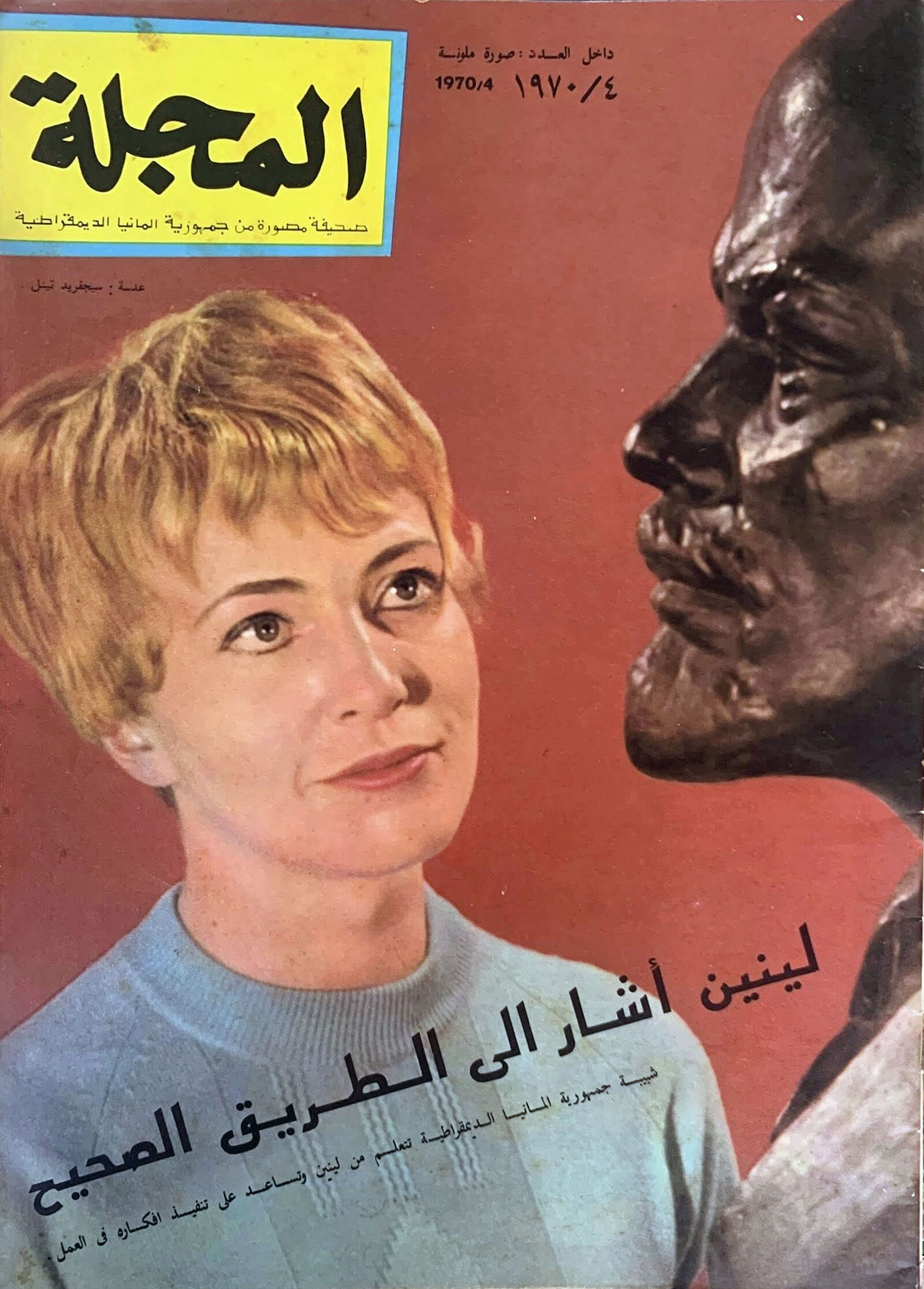
How was difference produced within a political project that proclaimed international solidarity, equality, and anti-imperialism? Taking the Arabic-language illustrated magazine al-Majallah as its central case, this talk examines how the GDR visually negotiated its cultural and political relations with the Arab world. Through press photography, art reproductions, exhibition reports, and accounts of artistic mobility, al-Majallah did more than document international exchange: it participated in producing a visual vocabulary through which socialist solidarity and cultural difference became mutually legible.
Hala Ghoname introduces "brothering with rank" as a conceptual framework for a constitutive tension within socialist internationalism. The concept describes a relational structure in which fraternity did not necessarily dissolve hierarchy. Anti-imperialist solidarity and political proximity could coexist with developmental hierarchies, cultural tutelage, and asymmetrical positions of representation and knowledge. Brothering and othering thus emerge not simply as opposing gestures, but as intertwined processes through which the socialist "brother" could simultaneously be brought into a shared political imaginary and marked as culturally different.
Reading al-Majallah as both a medium of cultural diplomacy and a site of visual knowledge production, the talk moves between images, exhibitions, and artistic encounters to ask how internationalism was not only proclaimed but visually produced. It thereby interrogates the ambivalent structures of seeing and knowing through which the egalitarian promise of GDR internationalism acquired cultural form.
Hala Ghoname (Kunsthistorisches Institut in Florenz – Max-Planck-Institut) is an art historian specializing in modern and contemporary art, exhibition histories, visual culture, and cultural diplomacy, with a particular focus on artistic exchanges between the German Democratic Republic (GDR) and the Arab world during the Global Cold War. Combining approaches from global art history, exhibition studies, media archaeology, and visual culture, she investigates the role of visual media and archival collections in reconstructing histories of artistic circulation beyond national and ideological boundaries.
Alongside her academic research, Ghoname is engaged in curatorial practice and museum collaborations. She currently serves as co-curator of the exhibition In Search of a New Language: DDR–MENA at DAS MINSK Kunsthaus, Potsdam, and has published widely on visual diplomacy, Orientalism, image politics, and transregional art histories, including the monograph Muḥammad ʿAlī's Soft Power in Europe: Orientalist Portraits between Visual Diplomacy and Saʿidian Orientalism (De Gruyter, 2025).
An essay from the KHM series OYOYO (after Chetna Vora). Anti-colonial artistic perspectives on the GDR.
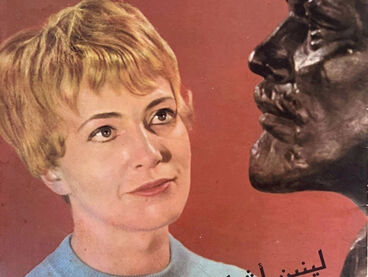
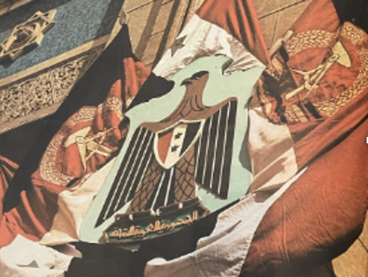
 Harald Hakenbeck: "Den Kindern Algeriens" in einer Abbildung im al-Majallah, Juli 1967, Dresden: Verlag Zeit im Bild, persönliche Sammlung von Hala Ghoname |
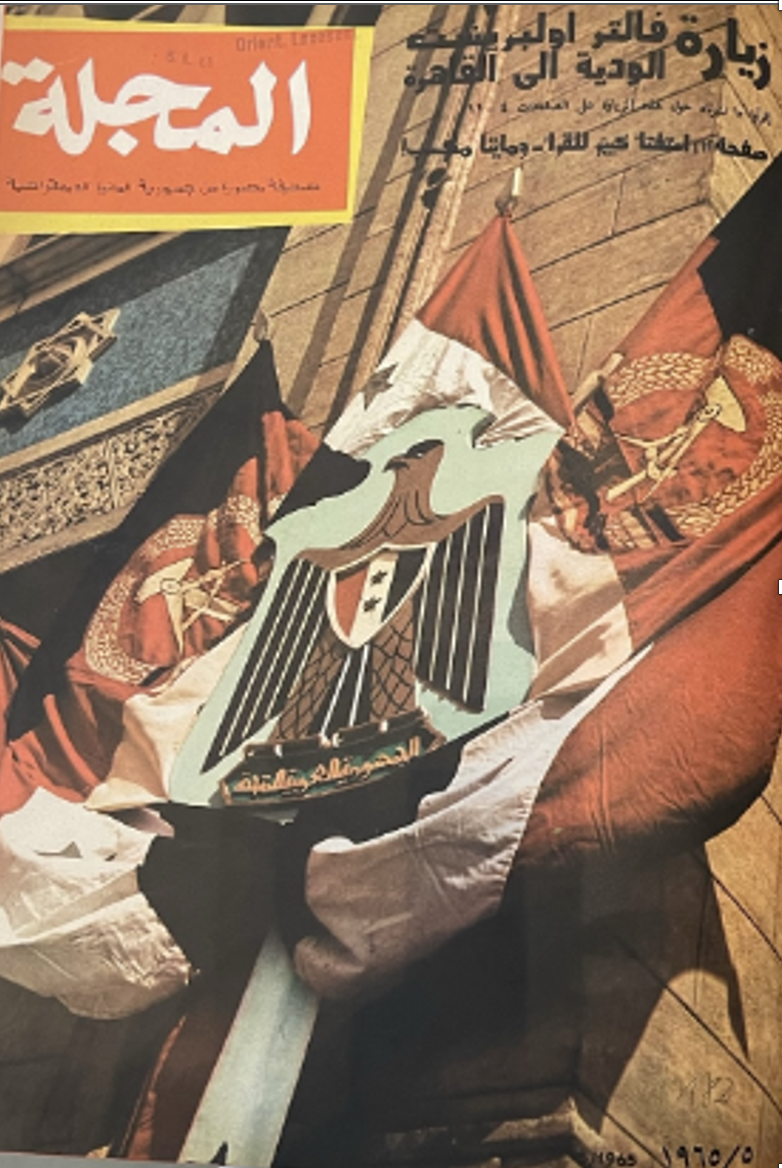 Harald Hakenbeck: "Den Kindern Algeriens" in einer Abbildung im al-Majallah, Juli 1967, Dresden: Verlag Zeit im Bild, persönliche Sammlung von Hala Ghoname |
Themes
Themen
- Exhibition
- Awards
- Library
- Speech
- edition KHM
- Festival / Award ceremony
- FG exMedia
- FG Film und TV
- FG Kunst
- FG Kunst- und Medienwissenschaften
- Movie screening
- Glasmoog Books
- Glasmoog - Raum für Kunst und Diskurs
- KHM Journal
- Concert
- Cooperation
- LAB Jahrbuch
- LECTURE Reihe
- Teachers elsewhere
- literature
- off topic
- News articles
- Publications
- Job offers
- Study
- TV broadcast
- Event
- all