

Prof. Dr. Lilian Haberer
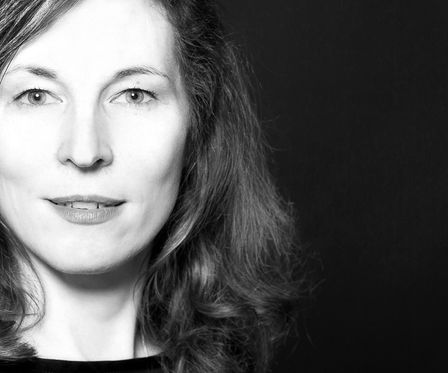
Professor of art history with an expanded concept of material
+49 22120189 - 313 lilian.haberer@khm.de
Heumarkt 14, Etage: R.3.25
In addition to the expanded concept of material, my research questions and fields address materialities and materialisms; contamination as a collaborative practice that also arises through contact; The discussion and reflection of materiality also encompasses scaling; the tactility of photography, moving images, and (post-)digital media. Further more, image politics and image practices in the age of networked images are addressed. To what extent epistemologies of movement, collective and transversal practices, and processes of undoing and unlearning in teaching and scholarly research could be connected? I am particularly interested in the role of curatorial processes as agencement—as long-term, sustainable procedures that unfold in layers—and in how media and moving-image installations and exhibitions address alternative concepts of spatiality and temporality (such as diasporic temporality). In what ways are ecocritical and climate justice issues linked to long-term structures and timeframes, and to what extent do contamination, toxicity, and sociality contribute to a different understanding of ecology? In this context, I am also interested in geopoetics and geopoetic practices in art.
In my teaching, I place great importance on seminar collaborations across departments, as well as within the fields of art and media studies, and on collaboration with exhibition spaces, art institutions, initiatives, and archives, as well as with guest speakers such as scholars, curators, and artists, exhibition formats (documenta, Manifesta, etc.), and festivals (Ruhrtriennale, Blonde Cobra, etc.) are essential for a multilingual and multi-perspective approach to teaching. In the teaching area of Art History with an Expanded Concept of Material, Anna Bromley and I have been collaborating since the winter semester of 2024 with Karina Nimmerfall and Leon Filter, the Laboratory for Art and Research at the Faculty of Human Sciences at the University of Cologne, on a transdisciplinary, cross-institutional, and long-term format, such as the Longshot series on artistic research: In 2024, the KHM library hosted a “Library Series” featuring conversations and lectures on artistic re-historicization; in the winter semester 2025/26, there were conversations, lectures, and workshops on “Spaces of Multilingualism” in collaboration with the Temporary Gallery Cologne.
In collaboration with Ilka Becker (Mainz University of Applied Sciences), a cooperative seminar on social ecologies was held in the winter semester 2024/25 with the Temporary Gallery and in collaboration with the Scottish-Caribbean curatorial collective Sourgrass. In the Summer Semester 2026 and Winter Semester 2026/27, the study day “Reflections and Fluidities” will take place at the as part of Athanor Now, in cooperation with the Anna Polke Foundation and the Museum Abteiberg in Mönchengladbach. Based on Polke’s Biennale cycle and the exhibition *Then I heard a cracking of.* by the artists and students of the accompanying seminar, the event will explore material and process.
Recent Publications (Selection):
Monographs/Edited Volumes
erkörperte Moderne. Sozialität und Gegenkultur in der Gegenwartskunst (erscheint 2027).
Screen | Scapes. Architecture’s configurations in Film and Video works (erscheint 2027).
(hg. mit Karina Nimmerfall), Movement | Mouvement. Handlungsfelder des Ästhetischen und Politischen in der Kunst. Festschrift für Ursula Frohne, edition Metzel, München, 2022.
(hg. mit Philipp Hohmann, Anna Polze, Julia Reich, Jolanda Wessel)., Text\Werk. Lektüren zu Hito Steyerl, Hatje Cantz, Berlin 2022.
Herausgeberin mit Ursula Frohne und Annette Urban von Display | Dispositiv. Ästhetische Ordnungen (Paderborn 2019),
„Random Access. Medientechnologien partizipativ und experimentell“ (dt./engl), in: 9. Nam June Paik Award, Ausst.-Kat. Westfälischer Kunstverein, Münster 2019. „Screenings zum Documentary Turn“, in: Sandra Aßmann u. a. (Hg.), Wenden in den Geistes-, Sozial- und Kulturwissenschaften, (Wiesbaden 2017)
Essays/Catalog Contributions/Journal Articles
„Transversale und diasporische Zeitlichkeit. Filmische und sonische Montagen bei Isaac Julien, Sondra Perry und Elizabeth Price“, in: Architektur – Film – Klang. Zur Medialität des filmischen Raums, hg. v. Julian Blunck und Kassandra Nakas, (= Architektur der Medien. Medien Der Architektur, Bd. 4), Göttingen 2026, 184–223.
„Hybrid Dance Floor: Bildarchiv vergleichenden Sehens und Display sozialer Interaktion“/„Hybrid Dance Floor: An Image Archive of Comparative Viewing and a Display of Social Interaction“, in: Philipp Goldbach. Training Images, Berlin 2026, S. 62–69.
„Stan Douglas, Zur Doppelbewegung und Liveness postdigitaler Bilder/Stan Douglas. On the Dual Movement and Liveness of Post-Digital Images“, in: Camera Austria, After the Index (guest editor: Karina Nimmerfall) 174 (2026), pp. 37–44.
„Indexeffekte taktiler und thermosensibler Bilder in einer brennenden Welt/ Index effects of tactile and thermosensitive images in a burning world“, in: Alex Grein. Ongoing, Luise-Straus-Preis, Ausst.-Kat. Max Ernst Museum, Brühl 2026. pp. 14–22.
„Imaginiert, konstruiert oder projiziert?“, in: Julian Jachmann/Sergiusz Kazmierski
(Hg.), Zur Wahrheit. Sein und Schein in Philosophie, Literatur und Kunst (= Regensburger Klassikstudien, Bd.9) Regensburg, 2026, S. 185–217.
(Debattenbeitrag Klimagerechtigkeit) Hui Luan Tran/Maurice Saß, „Träumen auf dem Boden der Tatsachen. Wie geht klimagerechte Kunstgeschichte? Gespräch mit David Ganz, Lilian Haberer, Kaja Ninnis und Miriam Swaszt“, in: kritische berichte 54/1 (2026), S. 106–113.
„Unfügsam bleiben. Dissonante Bewegungen“, in: Anna Bromley/Katrin M. Kämpf (Hg.) Not a Festschrift. Isabell Lorey. Die Kunst, nicht so regiert zu werden, Kunsthochschule für Medien, Köln 2024, S, 68–83.
„Elsewhere. Geopoetiken und ihre Differenzräume in der Kunst“, in: KHM Magazin, Nr. 2, Köln (sollte 2024 veröffentlicht werden), S. x–y.
„Displaced migrant mobility. On reappropriating spaces through embodied materiality“, in: Cathrine Bublatzky/ Burcu Dogramaci/Kerstin Pinther/Mona Schieren (Hg.), Entangled Histories of Art and Migration. Theories, Sites and Research Methods, Bristol 2024, S. 198–213.
Lemma „Zeitbasierte Medienkunst“, in: Marcel Schumacher/Elke Kania (Hg.), A–Z. Kunst in NRW. 2000–2023. Sammlung Kunsthaus NRW, Berlin/München 2024, S. 336.
„Resolution determines visibility. Zur Übersetzung und Störung fotografischer Bilder“, in: Linda Conze (Hg.), Size Matters. Größe in der Fotografie, Berlin 2024, S. 79–80, 90–91.
(mit Katrin M. Kämpf), „Julia Schers R.S.I/Julia Scher's R.S.I“, in: Julia Scher. Real/Fake. Surveillance. Infrastructures, Ausst.-Kat. Museuum Abteiberg, Mönchengladbach, Kunsthalle Zürich, Kunsthalle Gießen, Mamco Geneva, Berlin 2024, S. 15–21, 81–93, 157–169, 223–231.
„In Bildern mit Sprache Räume öffnen“, in: Anne Schülke (Hg.), zat #8. Bilder in Texte verwandeln, o.S.
„Körper in Bewegung – Zur Wiederaneignung und Materialität von Räumen“, in: Lilian Haberer/Karina Nimmerfall (Hg.), Movement Mouvement. Handlungsfelder des Ästhetischen und Politischen in der Kunst. Festschrift für Ursula Frohne, München 2022, S. 297–305.
„Tangible files and merged displays. Zur Materialität fotografischer Praktiken“, in: Beate Gütschow/Alex Grein/Susanne Holschbach (Hg.), Photographic Materials: Archives and new Tools, Köln 2022 (im Druck, Frühjahr 2022).
„Prothetische Screens? Modi der verkörperten Wahrnehmung in virtuellen und 3D-Raumerfahrungen“, in: Mit weit geschlossenen Augen. Virtuelle Realitäten entwerfen, hg. von Carolin Höfler/Philipp Rheinfeld, Paderborn 2022.
„Kuratieren als kollektives agencement. Über das Verlernen und Enflechten in transmedialen Verlaufsformen“, in: Lisa Gotto/Annette Simonis/Nicole Kandioler/Marion Biet (Hg.), Medienkomparatistik. Beiträge für vergleichende Medienwissenschaft, „Kuratieren als medienkomparatistische Methode“, 3 (2021), S. 143–163.
„Zur Resonanz und sensorischen Erfahrung von Projektionen im Werk Mischa Kuballs“ (dt./engl), in: Andreas Beitin/Holger Broeker/Fritz Emslander (Hg.) in Zus.arbeit mit Vanessa Joan Müller, Referenz Räume, Künstlerbuch u. Ausst.-Kat. Kunstmuseum Wolfsburg/Museum Morsbroich, Leverkusen, Köln 2021, S. 176–183.
„Transpositionen. Künstlerisches Forschen und verkörperte Erfahrung“ (dt./engl), in: Céline Berger, András Blaszek, Viktor Brim, Anna Ehrenstein, Kerstin Ergenzinger, Denzel Russel, Søren Siebel presents Bas Grossfeldt. degree_show_out of khm, Ausst.-Kat. KIT, Düsseldorf 2021, S. 8–88.
„Movement as driving element and Mode of Reflection in Alexander Kluge’s cooperations with Female Artists“, in: Richard Langston/Leslie A. Adelson/N.D. Jones/Leonie Wilms (Hg.), Alexander-Kluge-Jahrbuch, Bd. 6. The Poetic Power of Theory, Göttingen 2020, S. 273–290.
Short Biography
Lilian Haberer is professor for art history with an expanded concept of materiality at the Academy of Media Arts in Cologne since 2020. After studying art history, Italian studies, and philosophy—including a semester abroad at the Università La Sapienza in Rome—and conducting research at various institutes during her doctoral studies, she served as a research assistant to Rosemarie Trockel. At the same time, she has carried out a series of curatorial projects for museums and institutions, for example as part of the Dutch-German platform gap, and, together with Regina Barunke, directed the exhibition space Projects in Art & Theory, which was dedicated to bringing together exhibition and curatorial practice with scholarly discourse and featured artists who had not yet been shown in Germany. From 2007 to 2014, she worked at the University of Cologne as a research assistant and project coordinator for the DFG project “Spaces of Reflection on Cinematographic Aesthetics,” which focused on the materiality of media and built projection spaces. From 2011 to 2016, she also worked there as a research assistant for 20th- and 21st-century art at the Institute of Art History. From 2015 to 2018, together with Prof. Karina Nimmerfall, she initiated the “Laboratory for Art and Research, Mass Observation 2.0” at the Faculty of Humanities at the University of Cologne as part of a grant for digital teaching. From 2019 to 2023, she collaborated with Karin Lingnau on an archival and material research project exploring materiality in artistic processes, titled “Materialities in the Fringes of the Arts,” which included workshops and research trips aimed at establishing a material library.